
 EN
EN



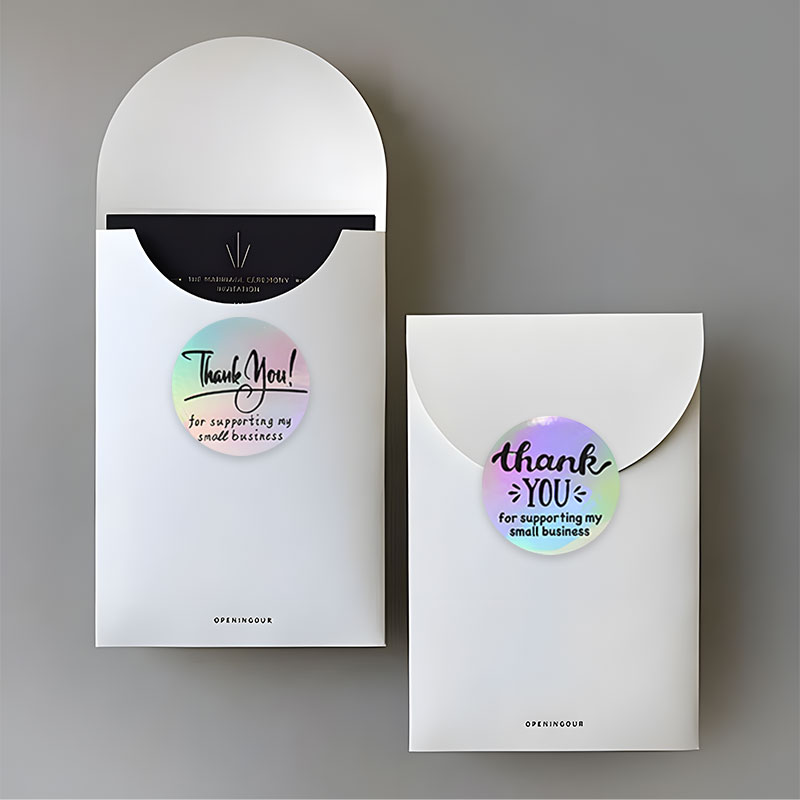
An emboss sticker is more than a decorative label — it is a functional branding tool expected to hold its texture, adhesion, and visual integrity across a wide range of real-world conditions. Whether applied to packaging, product boxes, glass bottles, or luxury retail items, every emboss sticker faces environmental stressors that can either preserve or degrade its performance over time. Understanding what drives that durability is critical for businesses that rely on consistent label quality.
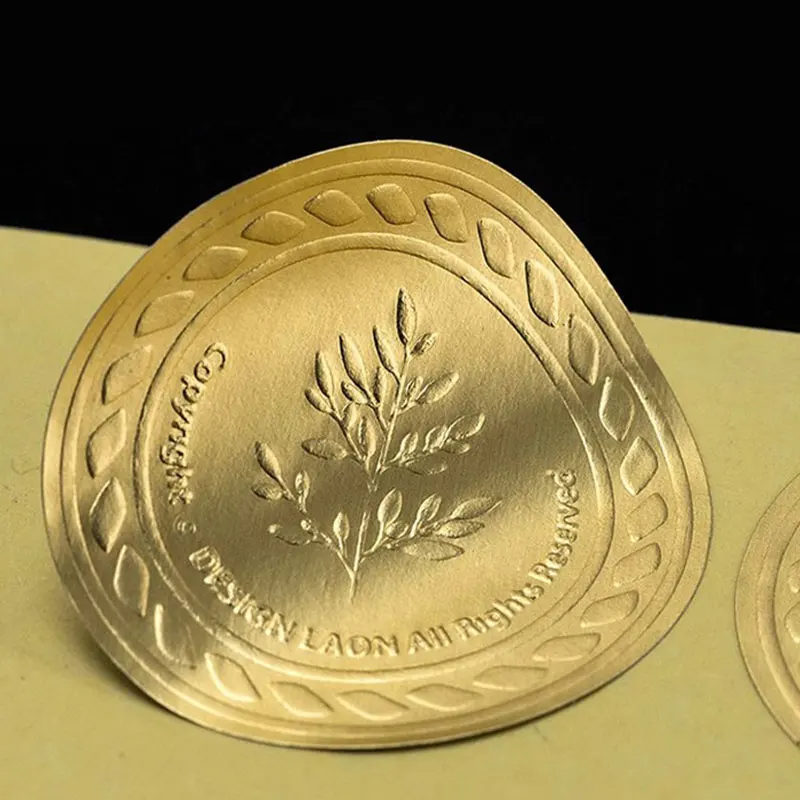
The durability of an emboss sticker is never determined by a single factor. It depends on a combination of material choice, adhesive formulation, surface preparation, and the specific environment where the emboss sticker will be used. Each of these variables interacts with the others, meaning a poor choice in one area can compromise the entire label system. This article breaks down the key factors that influence how well an emboss sticker holds up in different environments, giving you the practical knowledge to make better sourcing and application decisions.
Material and Construction of an Emboss Sticker
Substrate Selection and Its Role in Durability
The substrate — or base material — of an emboss sticker is the single most important factor in determining environmental resistance. Common substrates used in emboss sticker production include paper, polyester (PET), polypropylene (PP), and specialty foil-laminated materials. Paper-based emboss sticker options are cost-effective and suitable for indoor or dry environments, but they absorb moisture quickly, making them vulnerable to peeling, wrinkling, and color fading when exposed to humidity or condensation.
Synthetic substrates like PET and PP give an emboss sticker significantly better resistance to water, chemicals, and temperature fluctuations. A PET-based emboss sticker maintains its dimensional stability even in environments with frequent temperature shifts, which is essential for applications on cold storage packaging or refrigerated goods. When evaluating an emboss sticker for demanding conditions, synthetic substrates are almost always the more reliable choice.
Embossing Depth and Surface Coating Impact
The embossing depth affects how the emboss sticker responds to physical stress. Deep relief patterns on an emboss sticker create more dimensional variation, which can increase the risk of delamination at sharp edges if the wrong laminate or topcoat is applied. A shallow emboss sticker texture, on the other hand, tends to be more resilient under repeated handling or bending. Surface coatings — such as matte lamination, gloss lamination, or UV varnish — play a direct role in protecting the raised texture and foil elements of an emboss sticker from scratching, fading, and moisture ingress.
Adhesive Performance Across Different Environments
Adhesive Type and Temperature Range
The adhesive layer beneath an emboss sticker is the mechanical bond between the label and its application surface. Permanent acrylic adhesives are the most common choice for a standard emboss sticker because they offer strong initial tack and long-term bonding across a broad temperature range. However, when an emboss sticker needs to perform in high-heat environments — such as near machinery, in direct sunlight, or on products stored in warm warehouses — a rubber-based or high-temperature-rated adhesive provides better resistance to softening and slide-off.
Cold environments create a different challenge. Standard adhesives in an emboss sticker can become brittle in low temperatures, leading to edge lifting or complete detachment. Choosing an emboss sticker with a cold-temperature adhesive formulation — rated to function below freezing — is essential for frozen food packaging, outdoor industrial labels, or cold-chain logistics applications. Specifying the correct adhesive type for the expected temperature range is one of the most commonly overlooked steps in emboss sticker procurement.
Surface Compatibility and Application Conditions
Even the best adhesive will fail if the emboss sticker is applied to an incompatible or poorly prepared surface. Low-surface-energy materials like polyethylene and polypropylene containers require specially formulated adhesives that can bond without the anchor points that rougher surfaces provide. Contaminated, oily, or damp surfaces reduce adhesion immediately, causing an emboss sticker to lift within days. Applying an emboss sticker in humid or cold conditions also lowers initial bond strength, even when the adhesive itself is rated for those environments once cured.
Environmental Stressors and How They Affect Emboss Sticker Longevity
UV Exposure and Outdoor Durability
UV radiation is one of the harshest stressors for any emboss sticker used outdoors or near windows. Prolonged UV exposure causes color fading, substrate yellowing, and in some cases, cracking of the emboss sticker surface coating. Foil elements within an emboss sticker are particularly vulnerable if not properly UV-stabilized, losing their metallic sheen within months. Specifying an emboss sticker with UV-resistant inks, UV-cured coatings, or a weatherproof laminate dramatically extends outdoor service life and maintains the visual impact of the embossed design.
Moisture, Humidity, and Chemical Contact
Moisture is the most common cause of emboss sticker failure in food, beverage, pharmaceutical, and personal care applications. High humidity causes paper-based emboss sticker materials to absorb water vapor, softening the substrate and weakening the adhesive bond. Direct water exposure — such as condensation on chilled bottles or splashing in a food processing environment — accelerates delamination and edge curl on any emboss sticker not specifically engineered for wet conditions. Selecting a waterproof emboss sticker with a moisture-barrier laminate is non-negotiable for these applications.
Chemical exposure adds another layer of complexity. Cleaning agents, solvents, and even acidic product contents can attack the adhesive and coating of an emboss sticker. For industrial or laboratory labeling, the emboss sticker specification should include chemical resistance testing data to confirm the label will not degrade on contact with specific substances. A well-specified emboss sticker designed for the right environment retains both its structural integrity and its branding appeal throughout the product lifecycle.
FAQ
What substrate is best for an emboss sticker used outdoors?
For outdoor use, a synthetic substrate such as PET or PP is strongly recommended for any emboss sticker. These materials resist UV radiation, moisture, and temperature variation far better than paper. Adding a UV-protective laminate to the emboss sticker further extends its outdoor lifespan and preserves the quality of foil or printed elements.
How does humidity affect emboss sticker adhesion over time?
Humidity gradually weakens the adhesive bond of an emboss sticker, especially on paper-based materials. Moisture softens the substrate and reduces the contact area between the adhesive and the application surface. To ensure reliable performance in humid environments, select an emboss sticker with a waterproof coating and a moisture-resistant adhesive rated for the expected humidity level.
Can an emboss sticker maintain its texture after repeated handling?
Yes, an emboss sticker can maintain its raised texture through repeated handling if the right materials are used. A protective laminate — either matte or gloss — shields the embossed surface from abrasion and compression. Thicker substrates and shallower emboss patterns also improve tactile durability. For high-contact applications, specify an emboss sticker with a hard-coat or scuff-resistant laminate to preserve the three-dimensional detail over time.