
 EN
EN


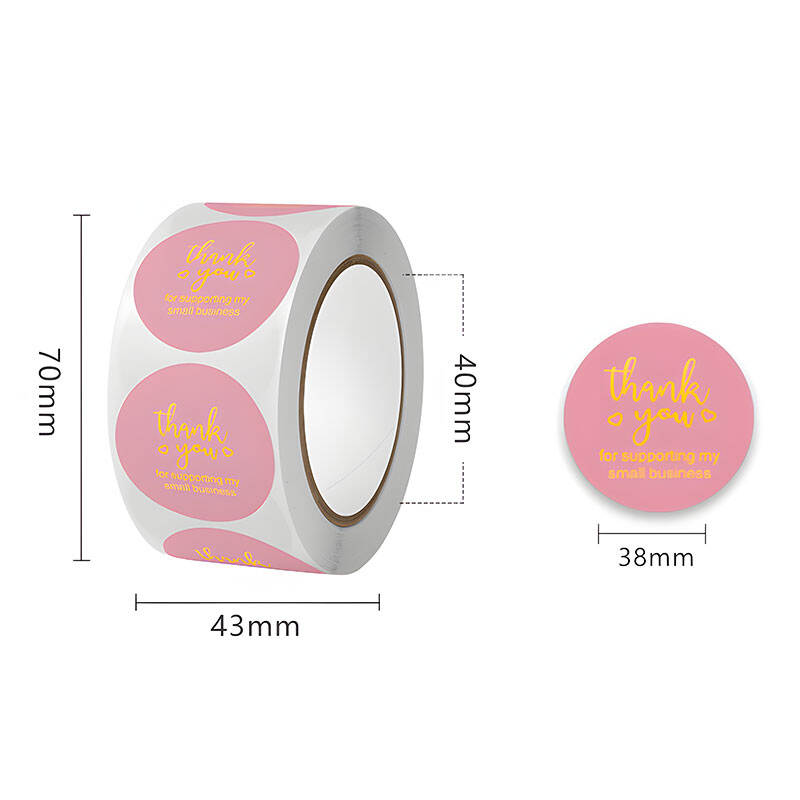
Producing a sticker customized to precise business requirements is far more complex than it appears on the surface. Whether you are sourcing labels for product packaging, brand promotions, or industrial identification, the path from design concept to finished physical sticker involves numerous technical and operational hurdles that can affect quality, cost, and lead time.
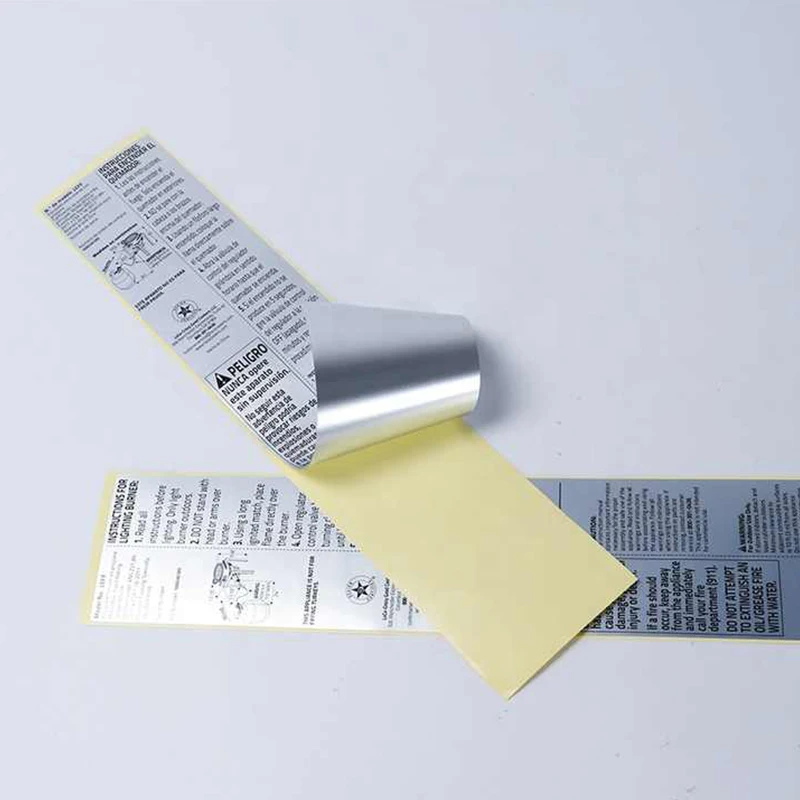
Understanding where these challenges arise gives procurement managers, brand owners, and packaging designers a practical advantage. This article explores the key difficulty areas encountered during sticker customized production, so you can anticipate obstacles, communicate more clearly with suppliers, and make better-informed sourcing decisions before a single roll is printed.
Material Selection and Compatibility Challenges
Choosing the Right Substrate for the Application
One of the earliest and most consequential challenges in any sticker customized project is selecting the correct substrate material. Different surfaces, environments, and product categories demand entirely different material properties. A sticker intended for a refrigerated food product needs moisture resistance, while one for industrial machinery must withstand heat, oil, and abrasion.
Common substrate options include paper, polyester (PET), polypropylene (PP), and vinyl, each with distinct tensile strength, surface finish, and print compatibility characteristics. Selecting the wrong material leads to peeling, fading, or outright adhesion failure in the field. Many production problems trace back to a mismatch between the chosen substrate and the actual end-use environment of the sticker customized product.
Suppliers and buyers must align on technical specifications before sampling begins. Failing to document environmental exposure requirements, surface type, and application temperature ranges upfront causes costly revisions later in the production cycle.
Adhesive Performance and Surface Matching
Adhesive chemistry is another layer of complexity in sticker customized manufacturing. Permanent, removable, repositionable, and freezer-grade adhesives each behave differently under varying temperature, humidity, and surface-texture conditions. Applying a standard adhesive to a low-energy surface like polyethylene or a rough-textured surface often results in poor bond strength and early detachment.
Testing adhesion compatibility with the actual target surface is critical but frequently skipped during fast-turnaround projects. Production teams must conduct peel and shear tests on representative samples before committing to a full production run. Without this validation, an entire batch of sticker customized labels may fail quality inspection or, worse, fail in the hands of end users.
Overcoatings and liners also influence adhesive performance. The liner release value must match the application speed of automated dispensing machines, otherwise feeding jams and application defects will disrupt downstream packaging lines.
Color Accuracy and Print Consistency Challenges
Managing Color Expectations Across Print Technologies
Achieving consistent, brand-accurate color is one of the most discussed challenges in sticker customized production. Brands often submit Pantone references or screen-based designs expecting an exact match on physical output. However, digital printing, flexographic printing, and screen printing each reproduce color through different mechanisms, and each has its own gamut limitations.
Digital printing offers high flexibility for short runs and variable data but may struggle to reproduce certain saturated Pantone colors without spot color ink additions. Flexography excels in high-volume consistency but requires plate preparation, which means early-run color drift until the press stabilizes. Misaligned expectations between the client and the print operator are a persistent source of rework in sticker customized projects.
Establishing a clear color approval process — including physical press proofs approved before full production — dramatically reduces the risk of color disputes. A digital proof alone is insufficient for brand-critical sticker customized work.
Print Registration and Fine Detail Reproduction
Fine lines, small text, and intricate graphics require precise print registration, meaning each color layer must align perfectly with the others. In sticker customized production, even a fraction-of-a-millimeter misalignment produces blurry outlines, color halos, or unreadable small text. This is especially problematic when a design includes overprinted metallic or white ink layers on transparent film substrates.
The structural rigidity of the substrate affects how reliably the web feeds through the press. Thinner materials with less dimensional stability are more prone to registration drift during long production runs. Operators must monitor registration continuously and apply corrections before variation exceeds tolerance thresholds.
Designers preparing artwork for sticker customized production should follow supplier-provided artwork guidelines, including minimum font sizes, minimum line widths, and safe zone measurements. Artwork that looks crisp on screen may become unreadable when printed at the actual sticker size, particularly for small product labels.
Die-Cutting and Finishing Precision Challenges
Custom Shape Cutting and Tolerance Control
Sticker customized orders frequently involve non-standard shapes — contour cuts around logos, unusual geometric forms, or complex outlines that must align precisely with printed artwork. Die-cutting either through rotary steel dies or digital laser cutting introduces its own tolerance requirements. When the cut path drifts from the print artwork, white borders appear unevenly or, in the opposite case, printed elements get trimmed off.
Rotary die tools have fixed geometry and are well suited to high-volume, consistent runs. However, they require setup investment per shape and cannot be easily adjusted once manufactured. Digital die-cutting offers more flexibility for complex or evolving shapes but operates at lower speeds, making it cost-inefficient for large sticker customized volumes.
Tolerance management is also critical where sticker customized products include sequential numbering, barcodes, or QR codes positioned at specific distances from cut edges. Even minor cutting drift renders such functional elements unusable in automated scanning environments.
Lamination, Coating, and Surface Finish Defects
Many sticker customized products require surface protection through gloss lamination, matte lamination, or specialty coatings such as soft-touch or anti-scuff finishes. Applying these coatings introduces additional failure modes. Delamination — the separation of the laminate film from the printed substrate — can occur if surface energy is insufficient, if the adhesive quantity is incorrect, or if the curing process is improperly controlled.
Silvering or orange-peel texture on gloss laminates is a common cosmetic defect that creates a hazy or uneven surface appearance. It is caused by air trapping during lamination, insufficient lamination pressure, or incompatible surface chemistry between the ink and the laminate adhesive. These defects are particularly unacceptable on premium brand packaging sticker customized orders where visual quality directly reflects brand value.
Matte finishes bring their own challenges, including susceptibility to scuff marks during winding and handling. Over-laminating a matte film can also alter color appearance, making previously approved colors look darker or flatter, which triggers further approval loops.
Quality Control and Consistency in Scale-Up
Maintaining Consistency Across Production Batches
Consistency between the approved sample and mass production output is a challenge that becomes more significant as order volumes grow. A sticker customized sample may be produced under tightly controlled conditions with fresh ink, a calibrated press, and a new die, while subsequent production batches use replenished ink stocks, re-mounted dies, and different substrate roll batches that carry subtle variations.
Ink density drift, substrate thickness variation within tolerance, and adhesive coat weight variation all compound across a long production run. For buyers ordering sticker customized labels across multiple shipments, ensuring batch-to-batch consistency requires documented process controls, retained color standard cards, and clear acceptance criteria shared between buyer and manufacturer.
Production facilities that operate ISO-certified quality management systems typically maintain better consistency than those relying purely on operator judgment. Requesting evidence of process controls, including color measurement records and inline inspection reports, is reasonable due diligence for any critical sticker customized supply relationship.
Handling Defects in Winding, Slitting, and Packaging
Even a technically perfect print and cut can be damaged during the final stages of production. Winding tension that is too tight causes adhesive bleed to the liner edge or causes thin substrates to telescope on the roll core. Winding tension that is too loose results in loose rolls that unwind inconsistently on application equipment. Both scenarios create application problems for end users of sticker customized rolls.
Slitting — the process of converting wide print webs into narrower rolls — introduces the risk of edge contamination from adhesive residue, ragged cut edges, or width variation. Any of these defects can cause label misfeeds in high-speed automatic application machinery, leading to production downtime at the customer's facility.
Proper packaging of finished sticker customized rolls protects them from moisture, UV light, and physical crushing during transit. Inadequate packaging can undo all the production quality achieved upstream, delivering a perfectly manufactured sticker customized product in damaged condition to the buyer.
Communication and Specification Management Challenges
Translating Design Intent into Production Specifications
A persistent source of difficulty in sticker customized projects is the translation gap between creative intent and production reality. Designers create artwork in environments that bear little resemblance to industrial printing conditions. Gradients, transparency effects, emboss simulations, and RGB color modes are all common in digital design software but require careful conversion before they can be reliably reproduced on physical sticker customized stock.
Incomplete or ambiguous specification documents create room for assumptions that lead to unexpected results. When a buyer specifies 'glossy finish' without clarifying whether this means gloss laminate or gloss varnish, or when 'waterproof' is stated without defining the degree of water resistance needed, misaligned outputs are virtually guaranteed. Detailed, written specifications covering material, finish, size tolerances, adhesive type, and color standards are non-negotiable for professional sticker customized procurement.
Regular communication touchpoints during pre-press, press approval, and pre-shipment inspection stages reduce the risk of discovering critical issues only after full production is complete. Proactive communication is far less costly than reactive dispute resolution.
Managing Revisions, Lead Times, and Minimum Order Quantities
Revision cycles are one of the most significant contributors to delayed sticker customized project delivery. Each round of artwork revision, sample re-production, and client approval adds days or weeks to the timeline. Compressed timelines create pressure on production teams to skip verification steps, which increases the probability of quality failures reaching shipment stage.
Minimum order quantity (MOQ) requirements also complicate small-batch sticker customized projects. Many material grades and die configurations are only economically viable above certain volume thresholds. Buyers with low-volume requirements may be forced to accept compromises on material specification or finish options, which may not meet their original product requirements.
Planning sticker customized projects with adequate lead time buffers, clear design freeze deadlines, and agreed revision limits creates a more structured process that serves both buyers and manufacturers. Rushing the front-end specification phase almost always creates more problems at the back end of production.
FAQ
What is the most common quality issue in sticker customized production?
Color inconsistency between the approved proof and mass production output is among the most frequently reported issues. It typically results from differences in ink batches, substrate surface variation, or printing press calibration drift across long production runs. Establishing a clear color standard and requesting inline color measurement records from the manufacturer helps manage this risk effectively for sticker customized projects.
How can buyers reduce material-related failures in sticker customized orders?
The most effective approach is to provide detailed end-use specifications before material selection begins. Document the application surface type, temperature range, humidity exposure, and required adhesion duration. Request material samples and conduct surface compatibility testing before approving production. A well-specified sticker customized project that undergoes proper material validation at the sampling stage avoids the majority of field failures.
Why does die-cutting precision matter so much for sticker customized labels?
Die-cutting precision directly affects the visual appearance and functional performance of sticker customized labels. Imprecise cuts create uneven borders around printed artwork, which undermines brand presentation on premium packaging. For labels carrying barcodes or QR codes, cutting drift can shift these elements outside the scanning zone, rendering them non-functional in automated logistics and retail environments.
What steps help maintain consistency between different batches of sticker customized products?
Consistency across batches requires documented process controls rather than reliance on memory or operator experience alone. Retaining physical color standard samples from the approved production run provides a reference point for future batches. Requesting batch-specific inspection reports, including color density measurements and adhesion test results, creates accountability. Buyers managing ongoing sticker customized supply relationships should include batch consistency requirements explicitly in their purchase specifications.
Table of Contents
- Material Selection and Compatibility Challenges
- Color Accuracy and Print Consistency Challenges
- Die-Cutting and Finishing Precision Challenges
- Quality Control and Consistency in Scale-Up
- Communication and Specification Management Challenges
-
FAQ
- What is the most common quality issue in sticker customized production?
- How can buyers reduce material-related failures in sticker customized orders?
- Why does die-cutting precision matter so much for sticker customized labels?
- What steps help maintain consistency between different batches of sticker customized products?