
 EN
EN



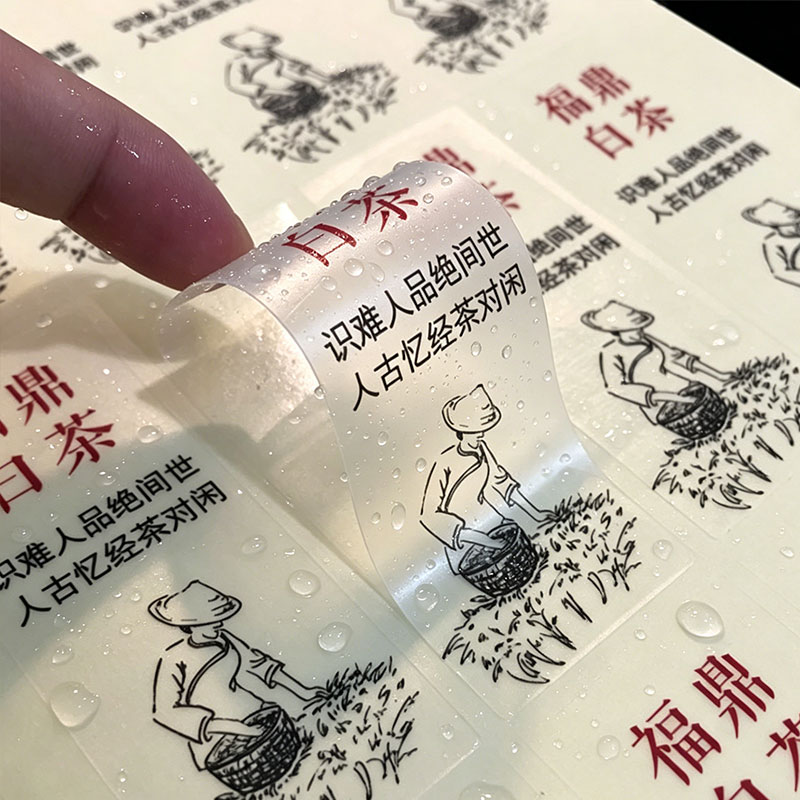
Precision is the foundation of any high-quality die cut sticker production process. Whether you are producing custom shapes for product packaging, branding labels, or promotional materials, the accuracy of each cut directly determines how professional and consistent the final product appears. Even minor deviations in the cutting process can lead to misaligned edges, uneven borders, or waste material that increases production costs. Understanding the variables that influence precision helps manufacturers, brand owners, and procurement specialists make better decisions at every stage of the process.

The production of a die cut sticker involves multiple interacting elements, from material selection and tooling quality to machine calibration and operator expertise. Each factor plays a distinct role in determining whether the finished sticker meets the required dimensional tolerance, visual sharpness, and edge consistency. This article examines the most critical factors that influence die cut sticker precision in production, providing practical insight for anyone involved in specifying, sourcing, or manufacturing custom sticker products.
The Role of Material Selection in Die Cut Sticker Accuracy
How Substrate Properties Affect Cuttability
The physical properties of the substrate used in die cut sticker production have a direct bearing on cutting precision. Materials vary significantly in thickness, density, flexibility, and surface texture, all of which interact differently with cutting blades and dies. A substrate that is too thick or too rigid may resist clean penetration, leading to torn or ragged edges rather than the crisp, clean lines that define a high-quality die cut sticker. Conversely, a substrate that is too thin or too soft may compress under the cutting force, resulting in slightly rounded or imprecise edges.
Common die cut sticker materials include vinyl, polyester, paper-based films, and specialty metallic laminates. Each material category requires a specific blade profile, cutting pressure, and speed setting to achieve optimal results. Metallic finish stickers and foil labels, for instance, require very precise pressure control because the reflective surface layer can crack or delaminate if the blade applies uneven force. Production teams must characterize each material type before running a full production cycle to ensure settings are properly calibrated.
Material consistency across a production batch is equally important. If the same material arrives from different supply lots with slight variations in thickness or adhesive coating weight, those differences can introduce inconsistencies in cutting depth and edge quality. This is why reputable die cut sticker manufacturers work with tightly specified raw material suppliers and perform incoming quality checks on each material batch.
Adhesive Layer Thickness and Its Influence
The adhesive layer beneath the face stock of a die cut sticker is often overlooked as a precision factor, but it plays a meaningful role. Adhesive layers vary in thickness and rheology, and these characteristics affect how cleanly the material separates along the cut line. A thicker adhesive layer may cause the sticker to pull slightly during the cutting stroke, creating a micro-deviation in the final shape. Pressure-sensitive adhesives with high tack can sometimes cause the material to shift on the carrier liner during die cutting, particularly at high production speeds.
The liner material itself, which serves as the release backing for the die cut sticker, also affects cutting precision. A liner that is too slippery may allow the stack to shift during kiss-cutting operations. A liner that is too resistant may require additional force, which can cause over-cutting or scoring of the liner in unintended areas. Matching adhesive type, coating weight, and liner selection to the cutting method is a core part of material engineering in die cut sticker production.
Tooling Quality and Die Design as Precision Determinants
Steel Rule Dies Versus Rotary Dies
The die itself is arguably the single most influential hardware factor in die cut sticker precision. Two primary tooling types dominate commercial sticker production: steel rule dies and rotary dies. Steel rule dies consist of sharpened steel blades set into a wooden or metal board in the desired cutting pattern. They are cost-effective for short to medium production runs and offer reasonable precision for most standard sticker shapes. However, over time, steel rule dies can wear at the blade tips, leading to progressive degradation in edge sharpness and cut consistency.
Rotary dies, by contrast, use a cylindrical steel roller engraved or etched with the cutting pattern. They are designed for high-speed continuous production and offer significantly higher dimensional consistency over long runs. Because rotary dies maintain their geometry through the entire production cycle without the blade deflection issues associated with flat dies, they produce a die cut sticker with more repeatable edge quality. The initial tooling investment for rotary dies is higher, but for large volume orders, the precision advantage justifies the cost.
Die design also encompasses the bevel angle of the cutting edge, the spacing between cuts, and the geometry of complex shapes. Tight internal corners, very fine points, and intricate curves all challenge die precision. A well-engineered die will account for material springback and blade deflection by slightly adjusting the cut geometry so the final sticker dimensions match the design intent exactly.
Die Wear and Maintenance Cycles
Even the highest-quality die begins to degrade with use. Die wear affects precision by rounding the cutting edge, which increases the force required to complete each cut and eventually produces frayed or compressed edges on the die cut sticker. Establishing a die maintenance schedule based on material type and production volume is essential for maintaining consistent precision throughout a product lifecycle.
Sharpening intervals, die replacement thresholds, and storage protocols all contribute to tooling longevity. Production facilities that track die usage in impressions and perform dimensional audits of the die cut sticker output at regular intervals are better positioned to detect and address wear before it becomes a quality problem. Preventive die maintenance is a best practice that distinguishes precision-focused manufacturers from those who react only after defects appear.
Machine Calibration and Press Settings
Cutting Pressure and Registration Alignment
Machine calibration is a critical variable in die cut sticker production precision. The cutting press must be set to deliver consistent pressure across the entire die surface, ensuring that every point of the cutting edge makes full contact with the material at the same force. Uneven platens, worn press bearings, or incorrect makeready can all create pressure differentials that result in some areas of the die cut sticker being over-cut while others remain partially attached to the carrier.
Registration is the alignment of the printed image to the cutting path, and it is one of the most visible precision attributes of a finished die cut sticker. If the die is even slightly out of register with the printed artwork, the sticker will show inconsistent borders — too wide on one side and cutting into the design on the other. Modern digital die cutting systems use optical registration marks and camera-guided alignment to achieve sub-millimeter registration accuracy. Conventional flatbed presses rely on mechanical registration pins and careful operator setup to achieve similar results.
Temperature and humidity in the production environment also influence press calibration. Material dimensions can shift slightly with changes in ambient conditions, and a well-calibrated machine setup in cool morning conditions may drift slightly as the production floor warms throughout the day. Climate-controlled production environments minimize this variability and help maintain consistent die cut sticker output quality across long production shifts.
Feed Speed and Web Tension Control
On roll-fed die cutting equipment, web tension is a significant factor in precision. If the material web is too loose, it may buckle or shift between stations, throwing off registration and causing irregular cut shapes. If tension is too high, the material can stretch slightly, which distorts the dimensions of each die cut sticker compared to the design specification. Setting and maintaining correct web tension requires careful calibration of unwind and rewind tension, as well as dancer roll control throughout the machine.
Feed speed interacts with cutting force in a non-trivial way. At higher speeds, the dwell time of the cutting blade in contact with the material is reduced, which can lead to incomplete cuts on thick or dense substrates. Slower speeds allow more complete material penetration but reduce throughput. Production engineers must balance speed with material requirements and quality standards to find the optimal operating point for each die cut sticker job.
Operator Expertise and Process Controls
Skilled Setup and Quality Monitoring
Even the best equipment and materials cannot compensate for insufficient operator expertise. Setting up a die cutting job correctly requires an understanding of material behavior, die geometry, and press mechanics that comes from experience and training. An experienced operator knows how to identify makeready issues before a full production run begins, saving significant material waste and rework time. They can interpret the first few test cuts of a die cut sticker job to detect registration drift, pressure inconsistencies, or die seating problems that would otherwise propagate through the entire production run.
In-process quality monitoring is equally critical. Rather than waiting until the end of a production run to inspect finished die cut sticker sheets, precision-focused facilities implement periodic sampling and dimensional checks throughout the run. This allows operators to catch and correct drift in real time, maintaining consistent precision from the first sticker to the last. Statistical process control methods, including control charts for key dimensions, can formalize this monitoring approach.
Process Documentation and Standard Operating Procedures
Precision in die cut sticker production is not a one-time achievement — it must be reproducible across operators, shifts, and production runs. This reproducibility depends on thorough process documentation. Standard operating procedures (SOPs) that capture machine settings, material specifications, makeready procedures, and inspection criteria ensure that every operator approaches a job the same way, eliminating the variability that comes from individual improvisation.
When a die cut sticker design is approved and goes into production, all critical parameters should be recorded in a job ticket that travels with the work order. If the same sticker needs to be reprinted months later, the job ticket provides an exact recipe that eliminates the need to re-engineer the setup from scratch. This level of process control is a hallmark of professional sticker production facilities and a key reason some suppliers consistently deliver superior precision compared to others.
Design Complexity and Tolerance Management
Shape Complexity and Its Effect on Achievable Precision
The geometry of the sticker design itself imposes limits on achievable precision. Simple rectangular or oval die cut sticker shapes are straightforward to cut with high accuracy because the die design is uncomplicated and the cutting forces are evenly distributed. Complex custom shapes with intricate curves, very narrow bridges, or acute internal angles present greater cutting challenges. Very fine points, for example, require the die blade to concentrate cutting force in a very small area, which can accelerate wear and create micro-tears rather than clean cuts.
Designers who understand die cutting constraints can create artwork that achieves the desired visual impact while remaining manufacturable at high precision. This means specifying minimum line widths, avoiding extremely acute angles, and designing internal cutouts with generous radii. Collaboration between graphic designers and production engineers during the artwork preparation stage significantly reduces the risk of precision problems when the die cut sticker moves into full production.
Tolerance Specifications and Acceptance Criteria
Defining clear dimensional tolerances for a die cut sticker order is a prerequisite for meaningful quality control. Without agreed tolerances, there is no objective basis for accepting or rejecting a production run. Industry practice for premium sticker production typically specifies positional tolerances in the range of plus or minus 0.3 to 0.5 millimeters for standard shapes, with tighter tolerances for applications where the sticker must align precisely with other packaging elements or structural features.
Communicating these tolerances clearly to the supplier and including them in the purchase order or quality agreement ensures accountability throughout the supply chain. A die cut sticker supplier who actively engages with tolerance discussions, proposes realistic specifications based on their equipment capability, and provides measurement data to confirm conformance is a far more reliable partner than one who accepts any specification without technical validation.
FAQ
What is the most common cause of imprecision in die cut sticker production?
The most common cause is a combination of die wear and improper machine calibration. When cutting tooling becomes worn without timely maintenance, edge sharpness declines and the cutting force required increases, leading to torn or compressed edges. Simultaneously, if the press is not calibrated for consistent pressure distribution across the die surface, some areas of the die cut sticker will be cut more cleanly than others. Regular tooling inspection and systematic press calibration checks address both issues.
Does the type of finish on a die cut sticker affect how precisely it can be cut?
Yes, the surface finish significantly affects cuttability and precision. Metallic, foil-laminated, or UV-coated finishes introduce additional layers with distinct hardness and brittleness characteristics. These specialty surfaces require carefully adjusted blade profiles and cutting pressures to prevent cracking, delamination, or surface marking along the cut edge. A die cut sticker with a hot foil or metallic finish demands more exacting setup than a standard matte vinyl sticker, but with proper tooling and calibration, excellent precision is achievable.
How does digital die cutting compare to conventional die cutting for precision?
Digital die cutting, which uses a computer-controlled blade or laser rather than a physical die tool, offers superior setup flexibility and very high registration accuracy, making it ideal for short runs of complex shapes. Conventional die cutting using rotary or flatbed dies offers better speed and cost efficiency for large production volumes while achieving excellent precision when tooling is well-maintained. For a die cut sticker with intricate artwork and tight registration requirements on medium to large runs, a combination approach — digital for proofing and short runs, conventional rotary dies for volume — is often the most practical solution.
What tolerance should I specify when ordering a precision die cut sticker?
For most branded packaging and product labeling applications, a dimensional tolerance of plus or minus 0.3 to 0.5 millimeters is appropriate and achievable with well-maintained production equipment. If the die cut sticker must align precisely with window cutouts, fold lines, or structural packaging features, tighter tolerances in the range of plus or minus 0.2 millimeters may be necessary and should be discussed with the supplier before tooling is produced. Always confirm that the supplier can demonstrate their equipment capability at the specified tolerance with documented measurement data.
Table of Contents
- The Role of Material Selection in Die Cut Sticker Accuracy
- Tooling Quality and Die Design as Precision Determinants
- Machine Calibration and Press Settings
- Operator Expertise and Process Controls
- Design Complexity and Tolerance Management
-
FAQ
- What is the most common cause of imprecision in die cut sticker production?
- Does the type of finish on a die cut sticker affect how precisely it can be cut?
- How does digital die cutting compare to conventional die cutting for precision?
- What tolerance should I specify when ordering a precision die cut sticker?